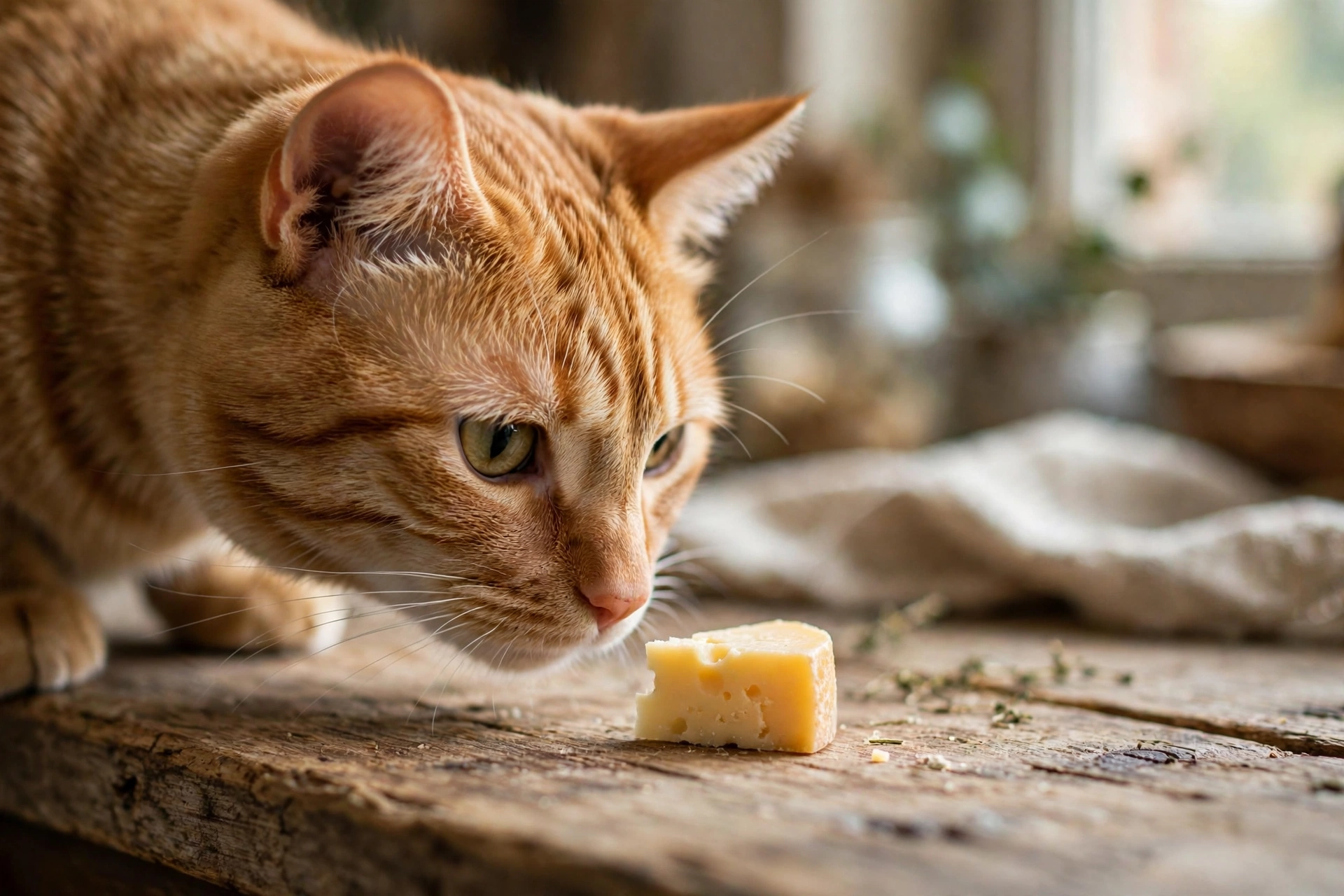
Picture this: a cartoon cat, happily lapping up a saucer of milk, a wedge of cheese waiting nearby. Tom & Jerry burned that image into all of our brains. So when your real cat comes sniffing around your cheese plate, it feels almost natural to share a piece.
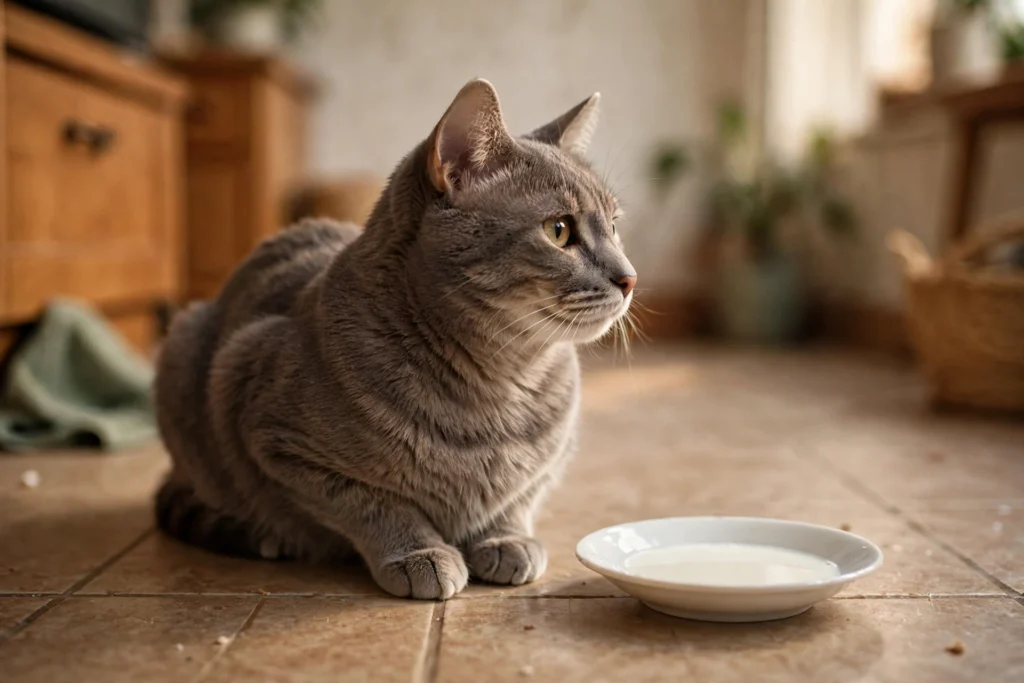
Here’s the uncomfortable truth: the cartoon lied to you. Most adult cats can’t properly digest dairy — and that saucer of milk would more likely end in an upset stomach than a happy cat.
But it’s not quite as simple as “never.” If you’re wondering can cats eat cheese safely, or whether cheese is bad for cats in general, this guide covers what actually happens when cats eat dairy, how much is safe, which cheeses to avoid, and better treats to offer instead.
The Short Answer: Can Cats Eat Cheese?
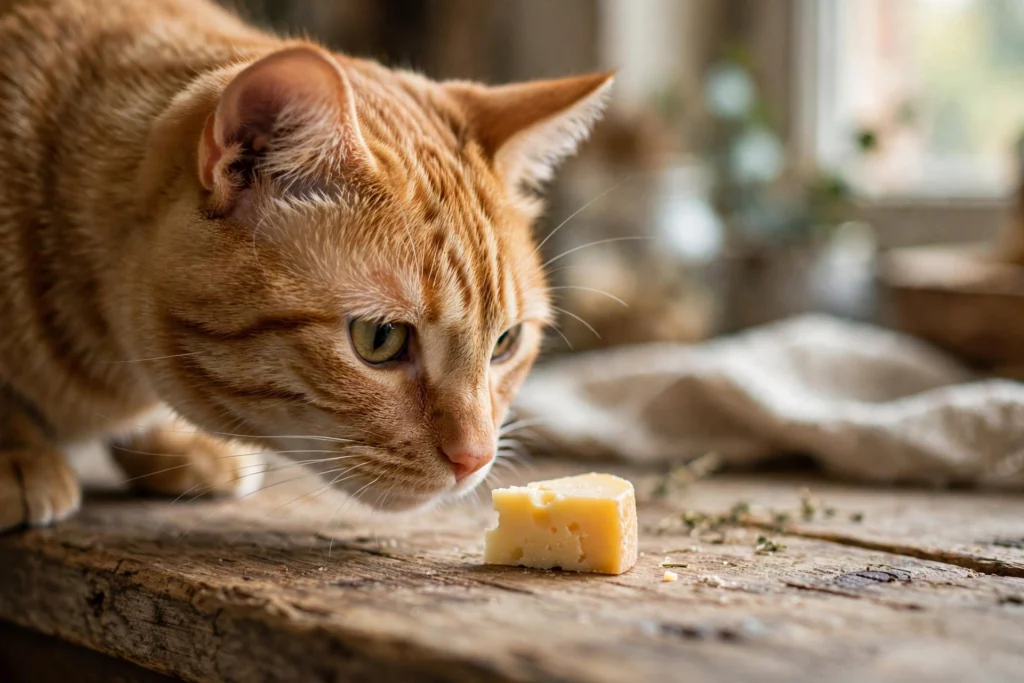
A tiny piece occasionally won’t poison your cat — but cheese is not good for them either. Most adult cats are lactose intolerant, meaning dairy often causes digestive trouble. Think of cheese as something your cat can survive, not something they should eat. Veterinary sources like PetMD confirm that while cheese isn’t toxic to cats, most adult cats lack the enzymes to digest it properly.
If you’ve read our other feeding guides like can cats eat eggs, you’ll notice a pattern: many human foods are “not toxic but not ideal” for cats. Cheese falls squarely in that category.
Why Adult Cats Can’t Handle Dairy (But Kittens Can)
Here’s the science, kept simple. Milk contains a sugar called lactose. To digest it, the body needs an enzyme called lactase.
Kittens produce plenty of lactase — they need it to digest their mother’s milk. But after weaning (around 8–12 weeks), most cats gradually stop producing it. By adulthood, the lactase tap is essentially off. This is why lactose intolerant cats are the norm, not the exception.
So when an adult cat eats cheese, the undigested lactose sits in the gut, ferments, and draws in water. The result, usually within 8–12 hours: diarrhea, gas, bloating, vomiting, or stomach cramps. Not every cat reacts the same way — some tolerate small amounts — but the majority don’t handle dairy well. If your cat does develop digestive issues, our guide on cat diarrhea causes and symptoms can help you understand what’s happening.
This is also why the “saucer of milk” is a myth worth retiring. Your cat isn’t enjoying it the way you think; their stomach is just paying for it later.
How Much Cheese Is Actually Safe for Cats?
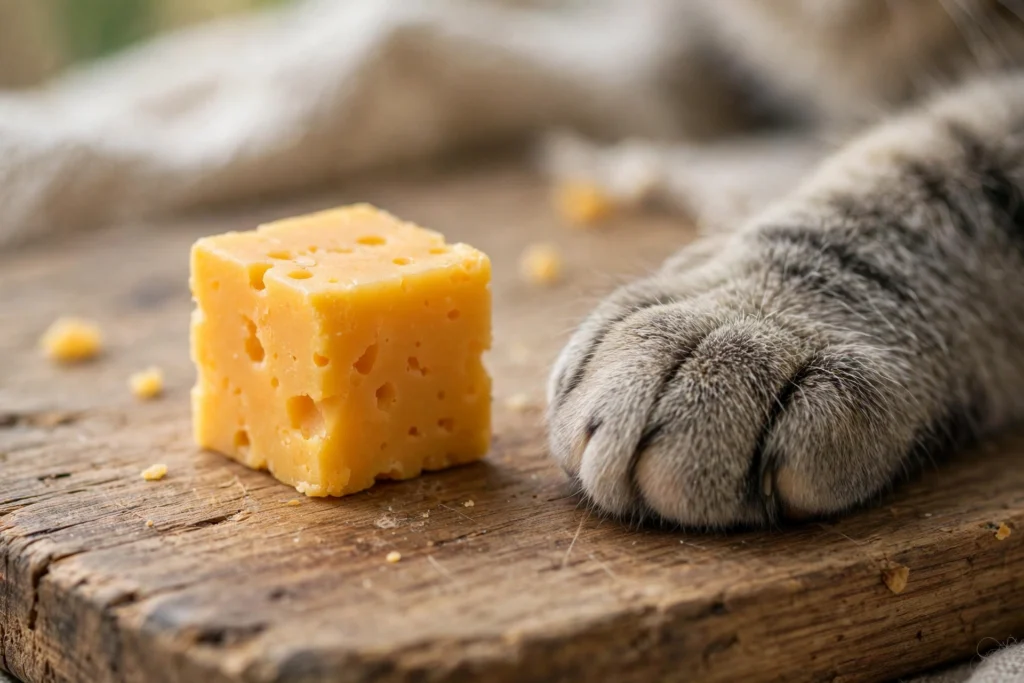
If your cat has stolen a bit of cheese before and seemed fine, you’re probably wondering about the limit. Veterinarians who are okay with occasional cheese use the dice rule: a piece about the size of a dice, once or twice a week at most.
And the 10% treat rule still applies — all treats combined (cheese included) shouldn’t exceed 10% of your cat’s daily calories. For an average 10-pound cat, that’s roughly 25 calories of treats per day. A dice-sized cube of cheddar is about 15–20 calories, so one small piece basically uses up the treat budget.
Honestly? There are better treats out there (more on that below). But if you’re going to share cheese with your cat, keep it tiny and rare.
What Cheese Can Cats Eat? Best vs. Worst Options
Not all cheese is equal. The key factor is lactose content — and aged, hard cheeses have less of it because much of the lactose gets broken down during aging. So what cheese can cats eat with the least risk?
- Aged cheddar, Parmesan, Swiss, Gouda — least bad: lower lactose, tiny piece OK rarely.
- Mozzarella, cottage cheese — higher lactose: even smaller amounts, rarely.
- Brie, Camembert — high lactose and rich: best avoided.
- Blue cheese — avoid: mold cultures can be harmful.
- Processed cheese slices — avoid: high sodium.
- Cheese with garlic/herbs/onion — never: toxic to cats.
The One Legit Use: Hiding Pills
Here’s something vets actually do recommend cheese for — hiding medication. If your cat needs a pill and won’t take it any other way, wrapping it in a small ball of cheese can work. Always check with your vet first before using cheese to hide a specific medication, as some drugs don’t mix well with high-calcium foods.
Can Kittens Eat Cheese?
Kittens under 8 weeks still produce lactase, so they tolerate dairy better. But cheese is still not recommended — kittens need kitten formula or mother’s milk, never cow’s milk or dairy snacks. Wait until they’re on solid kitten food, and even then, skip the cheese.
Better Treats Than Cheese for Your Cat
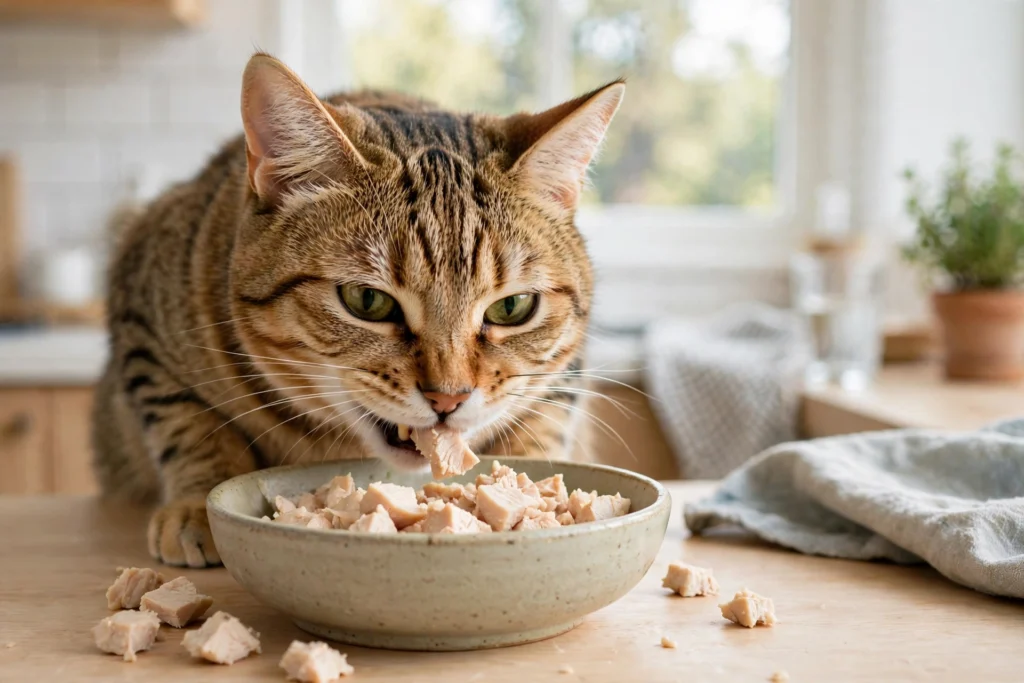
- Small pieces of plain cooked chicken or turkey — high protein, no lactose. See our fresh cooked cat food guide.
- Freeze-dried meat treats — single ingredient, made for cats.
- A teaspoon of plain canned pumpkin (not pie filling) — good for digestion.
- Commercial cat treats — portion-controlled. Our best dry cat food guide covers nutrition basics.
Your cat will be just as happy, and you won’t be cleaning up the consequences.
Frequently Asked Questions
Why does my cat love cheese if it’s bad for them? Cats are drawn to fat and protein — cheese is full of both. They don’t know it’s hard to digest. (The same curiosity drives cats toward peanut butter — also not ideal.)
Can cheese kill a cat? Plain cheese in small amounts won’t kill a healthy cat. Danger is with large quantities or toxic varieties (blue cheese mold, garlic/onion flavoring). When in doubt, call your vet.
Is a saucer of milk OK as a rare treat? No — milk has far more lactose than hard cheese. Buy cat-specific lactose-free milk from a pet store instead.
My cat ate a big piece of cheese. What now? Watch for vomiting/diarrhea over 12–24 hours. Ensure fresh water. If severe or lasting beyond a day, call your vet.
The Bottom Line
Can cats eat cheese? Technically yes, in tiny amounts, rarely — but the cartoon version where cats thrive on dairy is pure fiction. Most adult cats are lactose intolerant, cheese offers them nothing nutritionally, and there are far better treats.
About the Author
Rizwan Ali is the founder of CattyBatty, where he researches and writes practical, honest guides on cat nutrition, health, and everyday care.