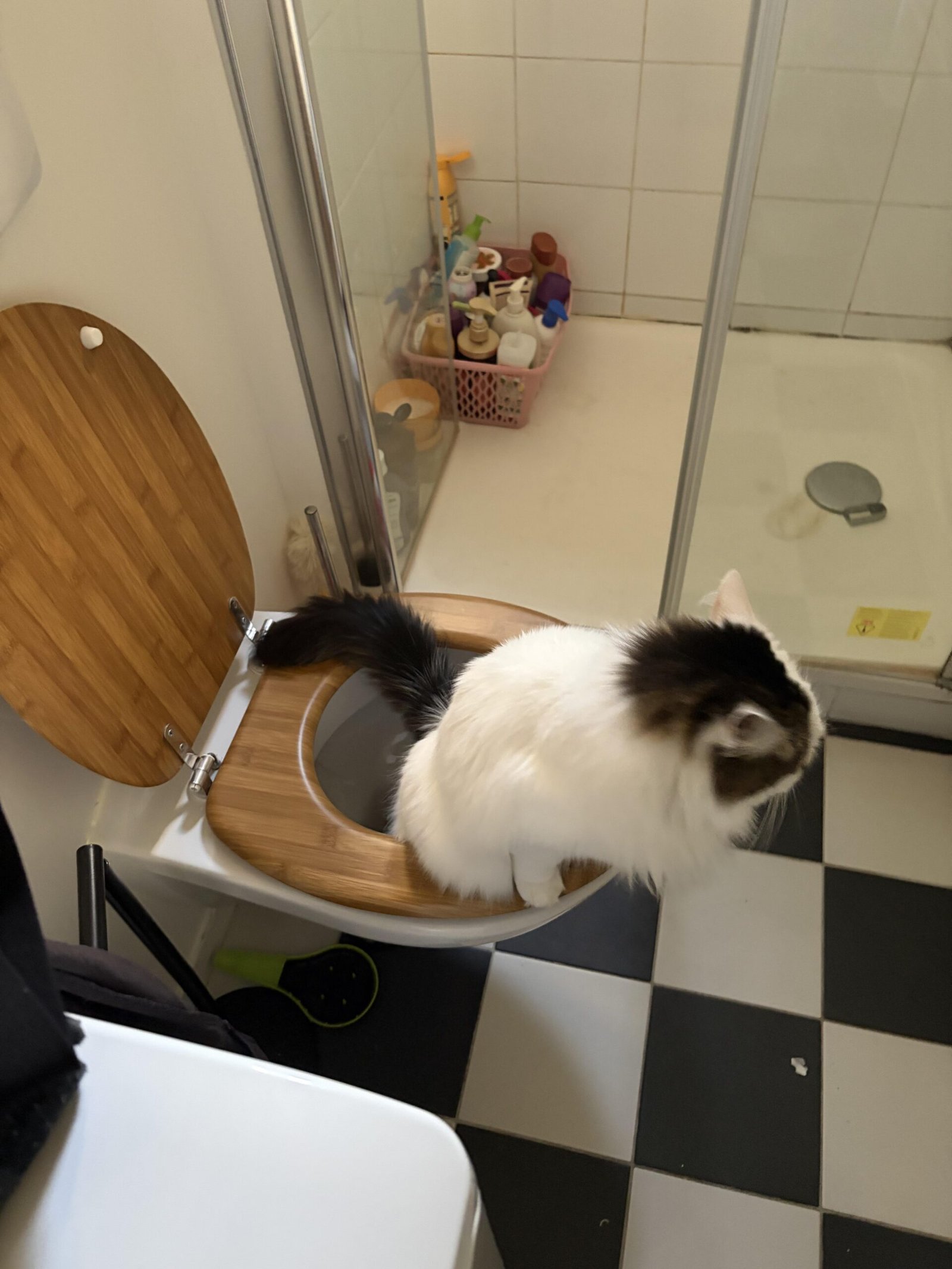
If you’ve ever thought about trying to toilet train a cat, I get it — that’s exactly the position I was in a year ago. For most of her life, my cat had occasional trouble with her litter box. She’d go outside it now and then, and after a vet visit, I learned it was likely stress-related rather than a medical issue.
What I didn’t expect was that she’d eventually start using the toilet on her own — and that experience is what led me to intentionally toilet train a cat who was clearly already halfway there, guiding her through it step by step until it stuck.
If you’re wondering whether this is realistic for your own cat, and how to do it without stressing her out, here’s exactly what worked for us.
Is It a Good Idea to Toilet Train a Cat?
Before you start, it’s worth knowing this isn’t the right choice for every cat. Whether or not you should toilet train a cat really comes down to her temperament and health — it tends to work best for calm, food-motivated adult cats in single-cat households, but it isn’t recommended for:
- Kittens, senior cats, or cats with mobility issues. Balancing on a toilet seat can be difficult or unsafe for them.
- Cats with existing litter box aversion or anxiety. Adding a new challenge on top of an existing problem usually backfires.
- Multi-cat households. Cats need to take turns at a toilet, and not every cat will wait.
- Any cat with ongoing health conditions. Toilet training removes your ability to monitor changes in urine or stool — often the first warning sign of a urinary tract infection or kidney disease. Talk to your vet before making the switch if your cat has any health history worth watching.
How to Toilet Train a Cat, Step by Step
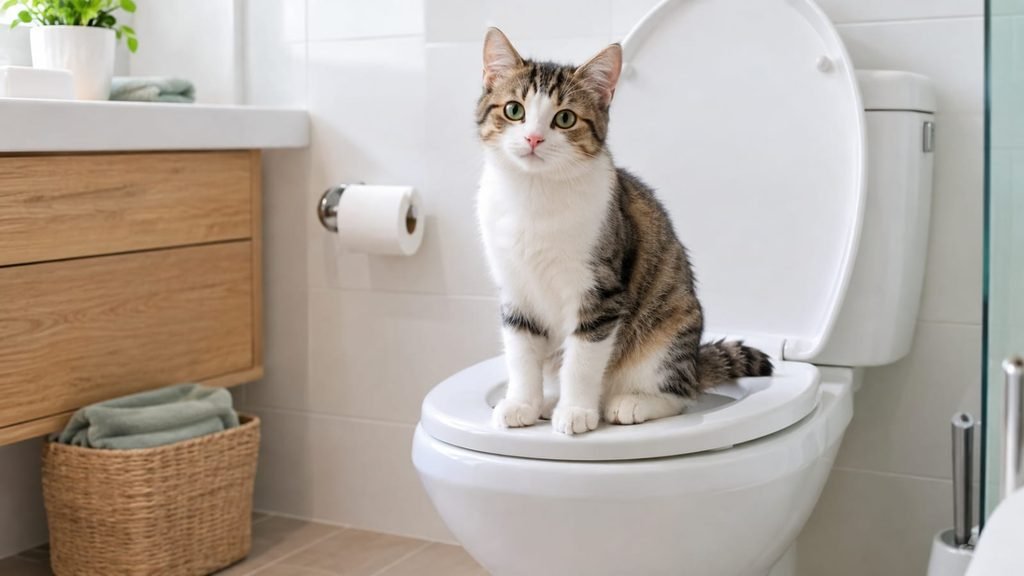
Step 1: Move the Litter Box Next to the Toilet
I started by relocating her litter box into the bathroom, right beside the toilet, and gave her several days to get used to the new location before changing anything else. This is the foundation of the whole process — rushing it is the most common reason toilet training fails.
Step 2: Gradually Raise the Litter Box
Once she was comfortable going in the bathroom, I began raising the box a little at a time — using sturdy, stable platforms — until it was level with the toilet seat. This step alone took a couple of weeks, and I didn’t rush it. A wobbly or unstable setup at this stage is what usually makes cats give up on the idea altogether.
Step 3: Introduce a Toilet Training Tray
Next, I swapped the litter box for a toilet training tray — a specially designed insert that sits under the toilet seat and holds a small amount of litter. This let her get used to balancing over the bowl while still having litter to dig in, which kept the transition familiar for her.
Step 4: Slowly Reduce the Litter
Over the following weeks, I gradually reduced the amount of litter in the tray until there was barely any left. Going slowly here matters more than at any other stage — a sudden change is far more likely to send a cat back to the bathroom floor than to the bowl.
Step 5: Remove the Tray Completely
Eventually, I removed the training tray altogether. By that point, she’d already adjusted to the position and motion involved, and she made the final transition on her own.
Things to Keep in Mind
- Go slow. Rushing any step is the most common reason this training fails.
- Keep the litter box as a backup for a while, especially early on, in case your cat has an accident or gets stressed.
- Watch for signs of stress or straining, which could point to a health problem rather than a training issue — don’t assume it’s just resistance to the process.
- This isn’t right for every cat, and that’s okay. A well-maintained litter box is still a perfectly good, safer option for most cats.
Final Thoughts
Toilet training my cat wasn’t something I originally planned — it happened gradually, and I decided to guide the process once I saw she was capable of it. It took patience and a few weeks of small adjustments, but it worked for us. If you’re considering it, go at your cat’s pace, keep an eye on her comfort level, and don’t be afraid to go back a step if needed.
FAQ
Can I toilet train a cat of any age?
Not really. It works best on healthy adult cats without mobility issues or litter box aversion. Kittens, senior cats, and cats with health conditions aren’t good candidates for this kind of training.
How long does toilet training take?
It varies, but most cats take several weeks to a few months, since each stage should be done gradually rather than rushed.
Is toilet training safe for cats?
It can be safe for the right cat, but it removes your ability to monitor litter box habits, which are often an early sign of urinary or digestive issues. Regular vet checkups become more important if you make this switch.
What if my cat stops using the toilet after training?
Go back to the previous step — such as reintroducing a small litter tray — and slow down. Stress, illness, or a change in environment can all cause setbacks, so it’s worth ruling out a health issue before assuming it’s just a training slip.