Looking for beautiful indoor plants that complement your home while keeping your cat’s safety in mind? This guide explores 23 houseplants commonly considered cat-safe, along with simple care tips and Pinterest-friendly decorating ideas.
Important accuracy note: “Air-purifying” is a popular search phrase, but ordinary houseplants do not significantly clean indoor air in typical homes. Ventilation, reducing pollutant sources, and suitable air filtration are more effective. Also, verify each plant’s scientific identity and pet-safety status before buying it.
1. Spider Plant (Chlorophytum comosum)
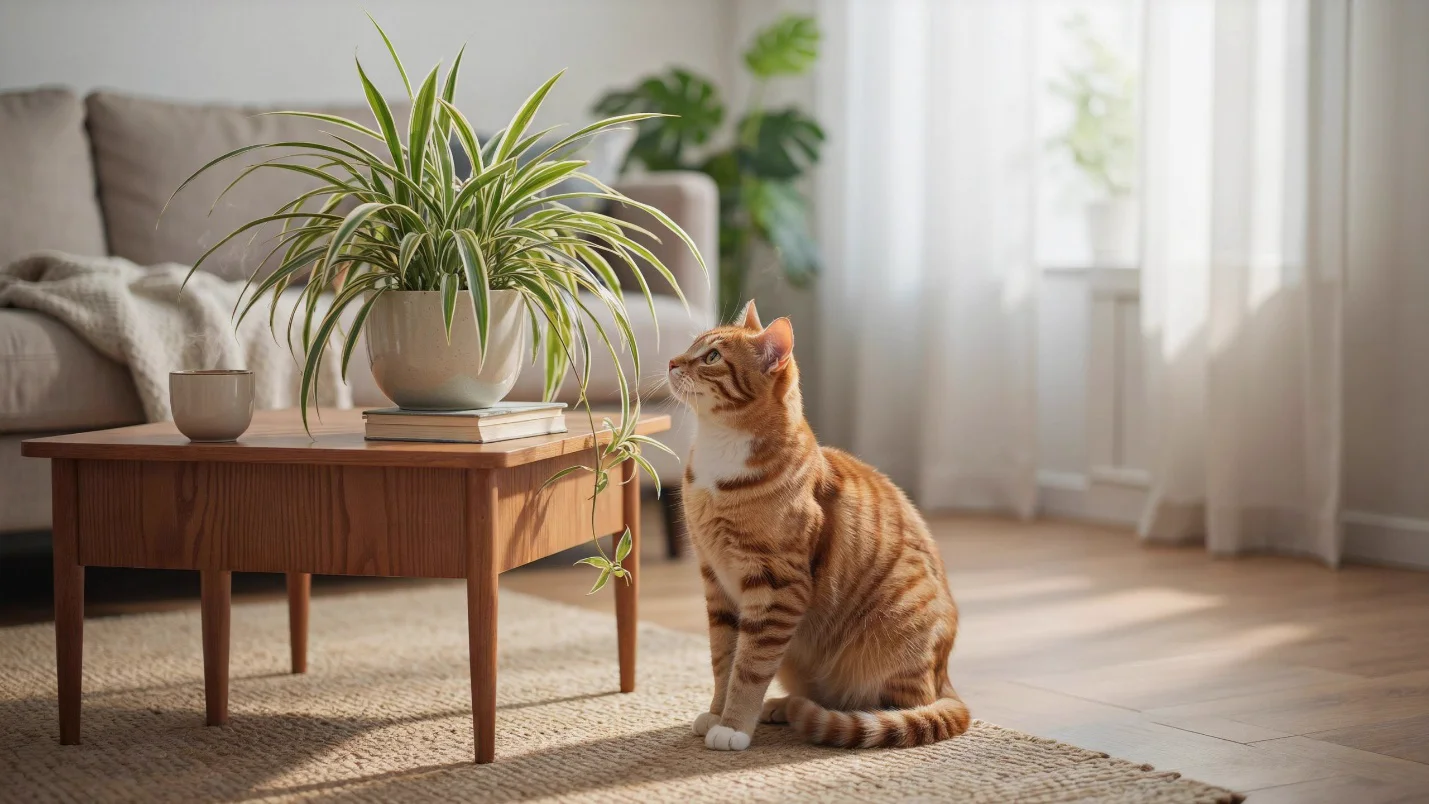
Spider plants are popular houseplants for beginners because their long, striped leaves create a fresh and lively appearance. Their cascading foliage looks beautiful on shelves, plant stands, and hanging baskets, making them suitable for apartments and larger homes alike. The ASPCA lists spider plants as non-toxic to cats, which makes them an appealing option for pet-friendly decorating. Their graceful shape also works wonderfully in Pinterest photographs featuring neutral furniture, natural materials, and bright, welcoming interiors.
Place your spider plant in bright, indirect light and use a pot with drainage holes. Water when the upper layer of soil begins to dry, avoiding constantly soggy roots. Remove brown leaf tips and damaged foliage to maintain a neat appearance. Although spider plants are often described as air-purifying, they should not replace ventilation or air filtration. Keep the plant healthy and discourage chewing, because eating substantial quantities of even non-toxic foliage may cause digestive upset in curious cats.
2. Boston Fern (Nephrolepis exaltata)
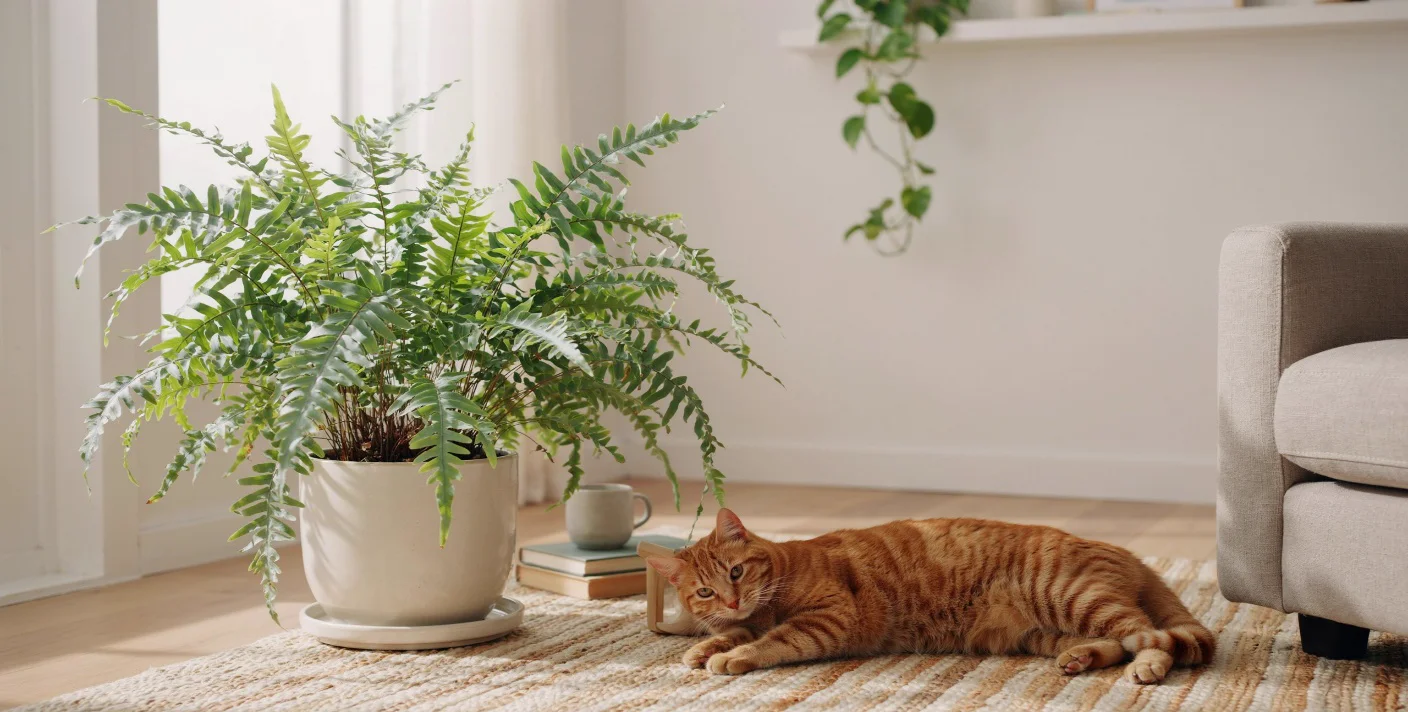
Boston ferns bring a soft, woodland-inspired feeling to indoor spaces through their abundant, delicate fronds. They look particularly attractive in bright living rooms, bathrooms with suitable natural light, and corners that need extra greenery. The ASPCA lists Boston fern as non-toxic to cats, making it a useful candidate for pet-friendly homes. Its full, feathery appearance complements woven baskets, wooden furniture, and neutral interiors, helping homeowners create a peaceful atmosphere without relying on artificial decorative plants.
Boston ferns prefer indirect light, humid conditions, and soil that remains consistently moist without becoming waterlogged. Check the soil regularly because these plants may dry out quickly in warm indoor environments. Remove dead fronds and use a pot with drainage to protect the roots. If your home has very dry air, monitor the foliage for browning and adjust the plant’s location or care routine. Remember that a Boston fern adds natural beauty but is not a replacement for effective indoor air filtration.
3. Areca Palm (Dypsis lutescens)
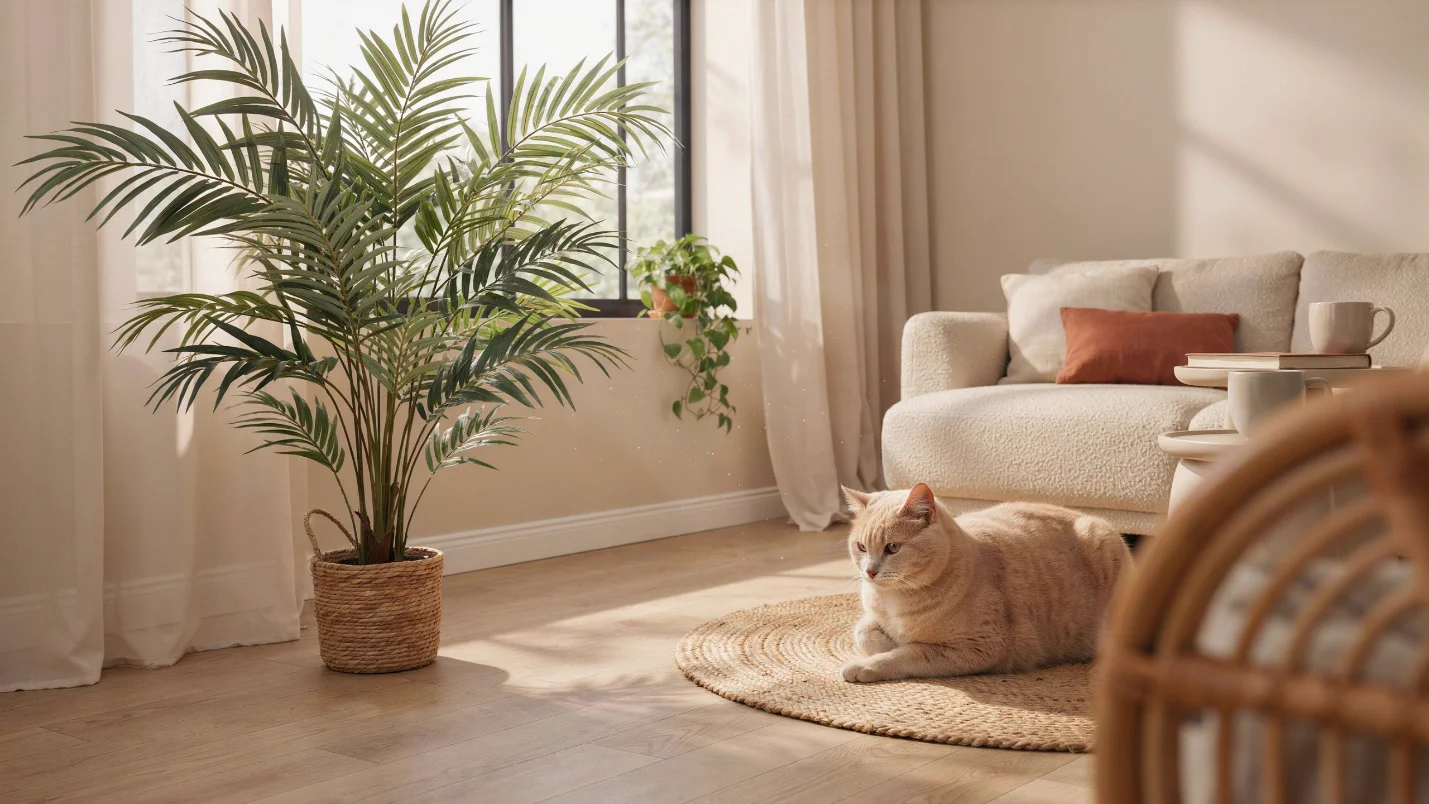
An areca palm adds height, movement, and a tropical touch to a living room. Its slender stems and arching fronds create an attractive focal point beside a sofa, near a bright window, or in an empty corner. The ASPCA lists areca palm as non-toxic to cats, making it a popular option for people seeking larger pet-friendly houseplants. Pair it with a woven basket or simple ceramic container to create a relaxed interior that feels fresh, natural, and welcoming.
Areca palms generally thrive in bright, indirect light and well-draining soil. Water when the upper portion of the soil starts to dry, and allow excess water to drain completely. Remove damaged fronds and occasionally wipe away dust to keep the leaves looking healthy. Choose a sturdy planter that will not tip easily if your cat brushes against it. While an areca palm can make a room feel greener, meaningful indoor air-quality improvements still depend primarily on ventilation, source control, and appropriate filtration.
4. Parlor Palm (Chamaedorea elegans)
Parlor palms have been used in indoor spaces for many years because their neat, upright growth fits both small apartments and larger rooms. They remain manageable in containers and adapt well to moderate indoor conditions. The ASPCA lists parlor palm as non-toxic to cats, which makes it a reassuring plant for homes with curious pets. Its refined, tropical appearance pairs nicely with minimalist furniture, bookshelves, and neutral-toned planters.
Keep your parlor palm in indirect light, since intense sunlight may scorch its delicate leaves. Allow the soil surface to dry slightly between waterings, then water thoroughly with good drainage. Remove yellowing fronds and provide moderate indoor humidity when possible. A compact container helps prevent tipping if your cat examines the plant closely. A parlor palm can make a room feel more welcoming, though it should not be regarded as an effective air-purifying solution.
5. Baby Rubber Plant (Peperomia obtusifolia)
The baby rubber plant offers thick, glossy foliage that adds a polished look to desks, side tables, and plant shelves. Its compact size makes it suitable for apartments and homes where floor space is limited. This plant is often included in collections of cat-friendly greenery, but owners should still confirm the plant’s identity and safety information before purchasing. Pair it with a simple ceramic pot and nearby decorative items to create a Pinterest-ready plant display with a natural, calming effect.
Place this peperomia in bright, indirect light and a well-draining potting mix. Water moderately and allow the soil surface to dry between waterings, since excessive moisture can damage its roots. Remove damaged leaves and avoid placing the plant in cold drafts or very hot locations. Its small footprint also makes it easier to place out of reach if your cat becomes overly interested. The baby rubber plant works as an attractive decorative accent rather than a meaningful source of air purification.
6. Calathea (Goeppertia species)
Calatheas are admired for their decorative patterned leaves, which add artistic interest to modern interiors. They are often chosen for living rooms and offices where their bold foliage can serve as a visual centerpiece. Many calathea species are listed as non-toxic to cats by the ASPCA, though pet-safety information can vary across species and cultivars. Their striking patterns photograph beautifully, making them popular in Pinterest interiors featuring textured textiles, woven planters, and natural tones.
Calatheas prefer indirect light and consistent moisture without waterlogged soil. They also appreciate humid conditions, so dry indoor air may cause leaf edges to brown. Water with attention to drainage and avoid allowing the roots to sit in standing water. Place the plant where your cat is less likely to paw at its moving leaves, since some calatheas raise and lower their foliage throughout the day. Like other houseplants, calatheas should be enjoyed for their appearance rather than expected to purify the air.
7. African Violet (Streptocarpus ionanthus, formerly Saintpaulia ionantha)
African violets add color to indoor plant collections through their compact rosettes and charming blossoms. They work well on windowsills, kitchen counters, and small tables where their flowers can be appreciated closely. The ASPCA lists African violet as non-toxic to cats, making it a suitable flowering option for pet-friendly homes. Group several violets in coordinating pots to create a cheerful Pinterest-style arrangement filled with soft color and texture.
African violets prefer bright, indirect light and careful watering that avoids wetting the leaves. Allow the soil surface to dry slightly between waterings and use a pot with drainage holes. Remove spent blooms and damaged foliage to encourage continued flowering. Keep the plant away from cold drafts and sudden temperature changes, which can stress delicate flowers. Although African violets brighten a room naturally, they do not meaningfully improve indoor air quality.
8. Ponytail Palm (Beaucarnea recurvata)
The ponytail palm is a sculptural plant with a swollen base and cascading, ribbon-like leaves. It adds personality to living rooms, entryways, and sunny corners while requiring relatively little attention. The ASPCA lists ponytail palm as non-toxic to cats, making it an interesting option for pet owners who want something distinctive. Its unusual form complements modern planters and natural décor, creating an eye-catching focal point in Pinterest-worthy interiors.
Ponytail palms prefer bright light and infrequent watering, since their swollen base stores moisture. Allow the soil to dry thoroughly between waterings and use a well-draining cactus or succulent mix. Avoid overwatering, which is one of the most common causes of problems for this plant. Place it in a stable container because its top-heavy shape can tip if disturbed. A ponytail palm is best appreciated as a decorative statement rather than an air-purifying device.
9. Christmas Cactus (Schlumbergera species)
The Christmas cactus is a festive flowering plant with segmented stems and vivid seasonal blooms. It brings cheerful color to windowsills, dining tables, and mantels during the winter months. The ASPCA lists Christmas cactus as non-toxic to cats, making it a safer seasonal alternative to some traditional holiday plants. Its cascading shape and bright flowers also create lovely photographs for Pinterest boards centered on cozy holiday décor and pet-friendly celebrations.
Christmas cacti prefer bright, indirect light and regular watering during their growing and blooming periods. Allow the upper soil to dry slightly between waterings and avoid exposing the plant to cold drafts. After flowering, reduce watering moderately while the plant rests. Keep the plant away from very hot radiators and sudden temperature fluctuations. A Christmas cactus adds seasonal charm without contributing meaningfully to indoor air purification.
10. Money Tree (Pachira aquatica)
The money tree is recognizable for its braided trunk and broad, attractive leaves. It is often placed in entryways, offices, and living rooms as a symbol of good fortune and natural style. The ASPCA lists money tree as non-toxic to cats, making it a popular choice for larger pet-friendly houseplants. Pair it with a decorative pot and a simple plant stand to create a stylish focal point that photographs beautifully in modern interiors.
Money trees prefer bright, indirect light and should be protected from harsh, direct sunlight. Water thoroughly when the upper soil dries out, then allow excess water to drain. Avoid overwatering and provide stable indoor temperatures away from drafts. Use a sturdy container because larger specimens can become top-heavy. Like other decorative houseplants, the money tree should not be relied upon for meaningful indoor air purification.
11. Cast Iron Plant (Aspidistra elatior)
The cast iron plant is known for tolerating low light, irregular care, and challenging indoor conditions. Its broad, deep-green leaves add a calm, elegant presence to hallways, bedrooms, and shaded corners. The ASPCA lists cast iron plant as non-toxic to cats, which makes it useful for pet owners seeking resilient greenery. Its understated appearance works well in Pinterest interiors that emphasize neutral colors, natural textures, and simple styling.
Cast iron plants tolerate low to moderate light and should not be placed in harsh direct sun. Water moderately and allow the soil to dry slightly between waterings. Remove dusty or damaged leaves to maintain a clean appearance. Because it tolerates neglect, it is a practical option for busy households and beginners. The cast iron plant is best valued for its durability and appearance rather than any air-purifying effect.
12. Prayer Plant (Maranta leuconeura)
Prayer plants are admired for their beautifully patterned leaves, which fold upward at night in a distinctive movement. They add visual interest to desks, shelves, and living-room plant groupings. The ASPCA lists prayer plant as non-toxic to cats, making it an appealing decorative option for pet-friendly homes. Its intricate foliage photographs wonderfully, especially in Pinterest interiors featuring layered textiles, wooden accents, and soft lighting.
Prayer plants prefer indirect light and consistently moist, well-draining soil. They also appreciate humidity, so very dry indoor air may cause brown leaf edges. Water regularly without leaving the roots soggy and avoid cold drafts. Their moving leaves may attract curious cats, so place them thoughtfully within your home. Prayer plants contribute decorative beauty rather than meaningful improvements to indoor air quality.
13. Polka Dot Plant (Hypoestes phyllostachya)
The polka dot plant adds playful color with its speckled pink, white, or red foliage. It works well as a tabletop accent, in mixed planters, or as a cheerful addition to a plant shelf. The ASPCA lists polka dot plant as non-toxic to cats, making it a fun option for pet-friendly decorating. Its compact size and colorful leaves make it especially popular in Pinterest photographs featuring bright, creative interiors and small-space styling.
Polka dot plants prefer bright, indirect light to maintain their vivid leaf patterns. Keep the soil evenly moist and provide moderate humidity when possible. Pinch back leggy growth to encourage a fuller shape. Regular pruning also helps maintain its compact appearance. While colorful and charming, the polka dot plant does not significantly purify indoor air.
14. Baby’s Tears (Soleirolia soleirolii)
Baby’s tears form a dense mat of tiny, delicate leaves that create a soft, moss-like appearance. It is often used in terrariums, small pots, and as a groundcover-style accent around larger plants. The ASPCA lists baby’s tears as non-toxic to cats, making it a gentle option for pet-friendly plant displays. Its fine texture adds contrast in Pinterest arrangements featuring ceramics, natural wood, and layered greenery.
Baby’s tears prefer indirect light and consistently moist soil. They do not tolerate drying out, so check the soil frequently in warm indoor environments. Provide humidity and avoid harsh direct sunlight, which can scorch the delicate foliage. Because of its spreading habit, trim it occasionally to maintain its shape. Baby’s tears are decorative rather than effective for improving indoor air quality.
15. Moth Orchid (Phalaenopsis species)
Moth orchids bring elegance to indoor spaces with their graceful arching stems and long-lasting blooms. They look stunning on coffee tables, sideboards, and bedroom dressers. The ASPCA lists moth orchids as non-toxic to cats, making them a refined flowering option for pet-friendly homes. Their delicate blossoms photograph beautifully, adding sophistication to Pinterest interiors focused on calm, curated décor.
Moth orchids prefer bright, indirect light and should be protected from direct midday sun. Water when the potting medium approaches dryness, allowing excess water to drain freely. Avoid letting the roots sit in standing water and provide gentle air circulation. After blooming, trim the flower spike appropriately to encourage future growth. Moth orchids are valued for their beauty, not for meaningful indoor air purification.
16. Echeveria (Echeveria species)
Echeverias are compact succulents with rosette-shaped leaves in soft greens, blues, and blush tones. They are ideal for windowsills, small planters, and decorative succulent arrangements. Many echeveria species are considered non-toxic to cats, though owners should verify the exact species before purchasing. Their sculptural form and pastel colors make them popular in Pinterest displays featuring minimalist ceramics and bright, airy styling.
Echeverias need bright light and very well-draining soil to thrive. Water thoroughly only when the soil has dried completely, then allow excess water to escape. Avoid getting water trapped in the rosette, which can cause rot. Provide good air circulation and protect the plant from frost. Echeverias serve as charming decorative accents rather than effective air-purifying plants.
17. Hens and Chicks (Sempervivum species)
Hens and chicks are hardy succulents that form attractive clusters of tightly packed rosettes. They suit windowsills, shallow containers, and rock-garden-inspired indoor displays. Sempervivum species are generally considered non-toxic to cats, but confirming the plant’s identity before purchase remains important. Their geometric shapes and subtle color variations photograph well in Pinterest interiors with rustic or Scandinavian styling.
Hens and chicks prefer bright light and gritty, well-draining soil. Water sparingly, allowing the soil to dry between waterings. Avoid overwatering, which can quickly damage these drought-tolerant plants. Good air circulation helps keep the rosettes healthy. Like other succulents, hens and chicks are decorative and should not be expected to purify indoor air.
18. Staghorn Fern (Platycerium species)
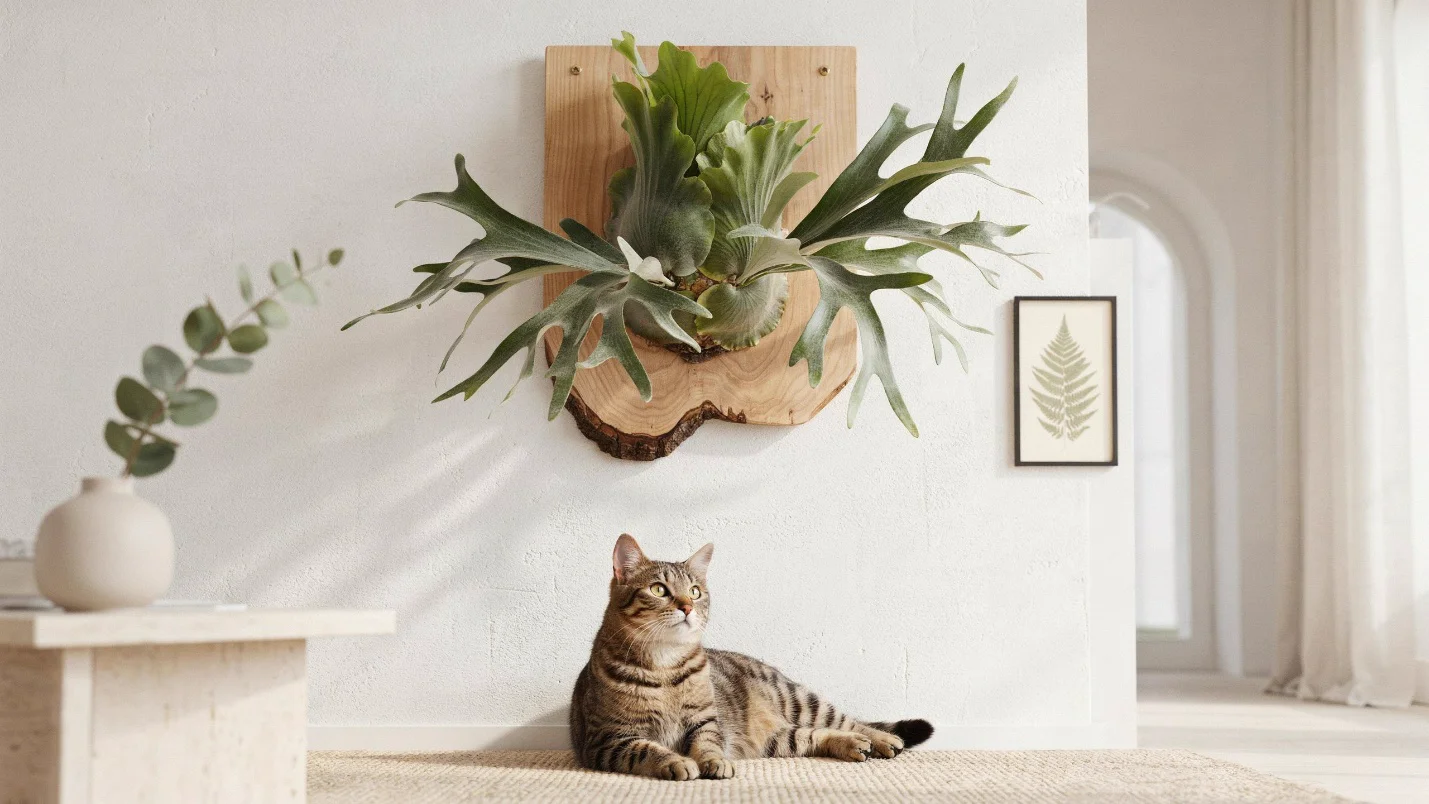
Staghorn ferns are dramatic epiphytic plants with antler-shaped fronds that create a striking wall display. Mounted on boards or hung in baskets, they become living artwork for bright living rooms and entryways. Many staghorn fern species are considered non-toxic to cats, though owners should confirm the specific plant’s safety information. Their bold, sculptural appearance makes them a standout feature in Pinterest interiors with natural wood and botanical styling.
Staghorn ferns prefer bright, indirect light and good air circulation. Water by soaking the mounting medium and allow it to dry slightly between waterings. Mist occasionally in dry indoor environments and avoid waterlogged conditions. Mount the plant securely so your cat is less tempted to investigate it, and keep it out of easy reach when possible. Staghorn ferns are admired for their dramatic form rather than any air-purifying capability.
19. Bird’s Nest Fern (Asplenium nidus)
The bird’s nest fern features broad, wavy fronds that unfurl from a central rosette, creating a lush tropical look. It works well as a floor plant in a decorative container or as a statement piece on a plant stand. The ASPCA lists bird’s nest fern as non-toxic to cats, making it a reassuring option for pet-friendly homes. Its vibrant green foliage pairs beautifully with neutral interiors and natural materials in Pinterest-worthy plant displays.
Bird’s nest ferns prefer indirect light and consistently moist, well-draining soil. They appreciate humidity, so dry indoor air may cause brown edges on the fronds. Avoid watering directly into the central rosette, which can encourage rot. Remove damaged fronds to keep the plant looking tidy. Like other ferns, the bird’s nest fern is decorative and not an effective solution for indoor air purification.
20. Ripple Peperomia (Peperomia caperata)
The ripple peperomia is loved for its deeply textured, heart-shaped leaves in rich green tones. Its compact growth makes it perfect for desks, bookshelves, and small plant groupings. Many peperomia species are considered non-toxic to cats, though confirming the specific plant’s safety information is always wise. The rippled foliage adds tactile interest to Pinterest displays featuring layered plants, ceramic pots, and cozy reading corners.
Ripple peperomias prefer bright, indirect light and well-draining soil. Water when the upper soil dries out, taking care not to overwater. Provide moderate humidity and avoid cold drafts. Remove damaged leaves to maintain a neat, attractive shape. Like other peperomias, the ripple peperomia is a decorative houseplant rather than a meaningful air-purifying solution.
21. Watermelon Peperomia (Peperomia argyreia)
The watermelon peperomia stands out with its striped leaves resembling tiny watermelons. It is a conversation-starting plant for desks, side tables, and bright shelves. Many peperomia species are considered non-toxic to cats, but owners should verify the exact plant’s safety status before buying. Its playful pattern makes it a favorite in Pinterest interiors with colorful accents, patterned textiles, and cheerful styling.
Watermelon peperomias prefer bright, indirect light and a well-draining potting mix. Water moderately, allowing the soil surface to dry between waterings. Avoid overwatering and provide stable indoor temperatures. Its compact size makes it easy to style in small spaces or grouped arrangements. The watermelon peperomia is best enjoyed as a decorative accent rather than an air-purifying plant.
22. Swedish Ivy (Plectranthus verticillatus)
Swedish ivy is a trailing plant with scalloped green leaves that look beautiful in hanging baskets and on high shelves. Its cascading growth adds softness to living rooms, kitchens, and bedrooms. Swedish ivy is often included in lists of cat-friendly plants, but owners should confirm its identity and safety information before purchasing. The flowing foliage creates a relaxed, lived-in feeling that photographs well in Pinterest interiors with natural light and casual styling.
Swedish ivy prefers bright, indirect light and regular watering during active growth. Allow the upper soil to dry slightly between waterings and provide good drainage. Pinch back trailing stems to encourage fuller growth. Hanging the plant can keep it out of reach of curious cats while showcasing its trailing habit. Swedish ivy is decorative rather than effective for improving indoor air quality.
23. Friendship Plant (Pilea involucrata)
The friendship plant features textured, quilted leaves with bronze and green tones that add depth to indoor plant collections. It works well in terrariums, small pots, and grouped displays on shelves or tables. Pilea species are often considered non-toxic to cats, though verifying the specific plant’s safety information remains important. Its rich texture and compact size make it a lovely addition to Pinterest arrangements with layered greenery and warm, inviting décor.
Friendship plants prefer bright, indirect light and consistently moist, well-draining soil. They appreciate humidity, so dry indoor air may affect their delicate foliage. Avoid overwatering and provide gentle air circulation. Pinch back leggy stems to maintain a bushy shape. The friendship plant brings texture and warmth to a simple room, though it does not meaningfully purify indoor air.